Head-to-Head to Solo Breakaway: Korir’s Sirikwa 10K Signals Boston Ambitions
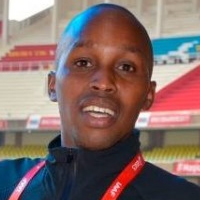

ELDORET, Kenya, February 16, 2026—On a sun-baked Valentine’s Day, with temperatures hovering around 25°C, John Korir stunned the cross country world in Eldoret, claiming the 5th Absa Sirikwa Classic men’s 10K title in his very first cross country race. The hilly grass mounds of Lobo Village, lined with cheering spectators and punctuated by strategically placed cooling station, set the stage for a tactical showdown. Two-time defending champion Daniel Ebenyo, expected to dominate, faded in the final kilometres as Korir’s marathon-honed strength and strategic pacing took him to victory.
Strategic Debut: Measuring the Field
Korir’s preparation is forged in the lung-bursting gradients of the Cherangany Hills in Trans-Nzoia County, a natural high-altitude training arena where thin air, rolling escarpments, and uneven forest trails combine to harden both physiology and resolve.

He approached the race primarily as a test of form ahead of Boston rather than as a guaranteed win. “I came here to see how my shape is as I seek to defend my title in Boston. I did not expect to win, realizing that this is cross country and not a marathon,” he explained.
The early kilometres saw Korir and Ebenyo running almost shoulder-to-shoulder, each matching the other’s pace through the twists, turns, and rolling mounds of the Eldoret course. The first 6 km was a careful balance: neither athlete attempted a breakaway, conserving energy as they negotiated the curves and hilly terrain. This phase demonstrated Korir’s strategic intelligence, by staying close to the reigning champion, he allowed his body to respond to the race rhythm and gauge his own capacity.
Mid-Race Surge: The Decisive Move
Just after the 6 km mark, Korir gradually increased his pace, exploiting the combination of heat, rolling hills, and the fatigue building in the pack. Where their opening kilometres had been nearly identical, Korir’s surge created a critical gap. Ebenyo, despite his early head-to-head positioning, was unable to respond to the incrementally faster pace. Each metre of acceleration on the uneven course stretched the gap further, turning a close tactical duel into a solo pursuit.

Korir’s first-ever cross-country race suddenly became a display of tactical mastery. He maintained the surge through kilometres 7 and 8, navigating the curves and undulating mounds with efficiency, while Ebenyo’s pace began to drop noticeably. By the final kilometre, Korir was fully in control, pushing forward with a smooth, sustained rhythm that reflected his marathon conditioning, leaving Ebenyo to fade from contention.
Closing the Gap on Legacy
Korir’s victory highlighted the subtle science of cross country: initial restraint, mid-race acceleration, and maintaining speed through the closing kilometres can unpick even seasoned champions. For Ebenyo, the early head-to-head effort, matched in the first 6 km, may have contributed to the fatigue that saw his pace drop in the decisive stage of the race.
Looking ahead, Korir’s focus is already on defending his Boston Marathon title. “I will just go back and sharpen it up a little before Boston. I won Boston last year in 2:04, and I will be going majorly to defend my title,” he said. Beyond elite competition, Korir is giving back through Transcend Academy in Cherangany, supporting the next generation of athletes in his community, an initiative of his brother, a retired marathoner, Wesley Korir.
The men’s 10K at the 5th Absa Sirikwa Classic was more than a medal ceremony; it was a tactical masterclass on a challenging, sun-baked course. Korir’s debut victory not only rewrote expectations for marathoners in cross country but also offered a lesson in how strategy, endurance, and split management can triumph over terrain, temperature, and a defending champion.


Comments